Sewer & Sump
Sewer line and sump pump service to keep water flowing the right direction — away from your home.
- A camera on the sewer line beats guessing: roots, a bellied pipe and a collapse are three different jobs.
- Where the water is coming from matters before a sump pump is sized, since the pump treats the symptom.
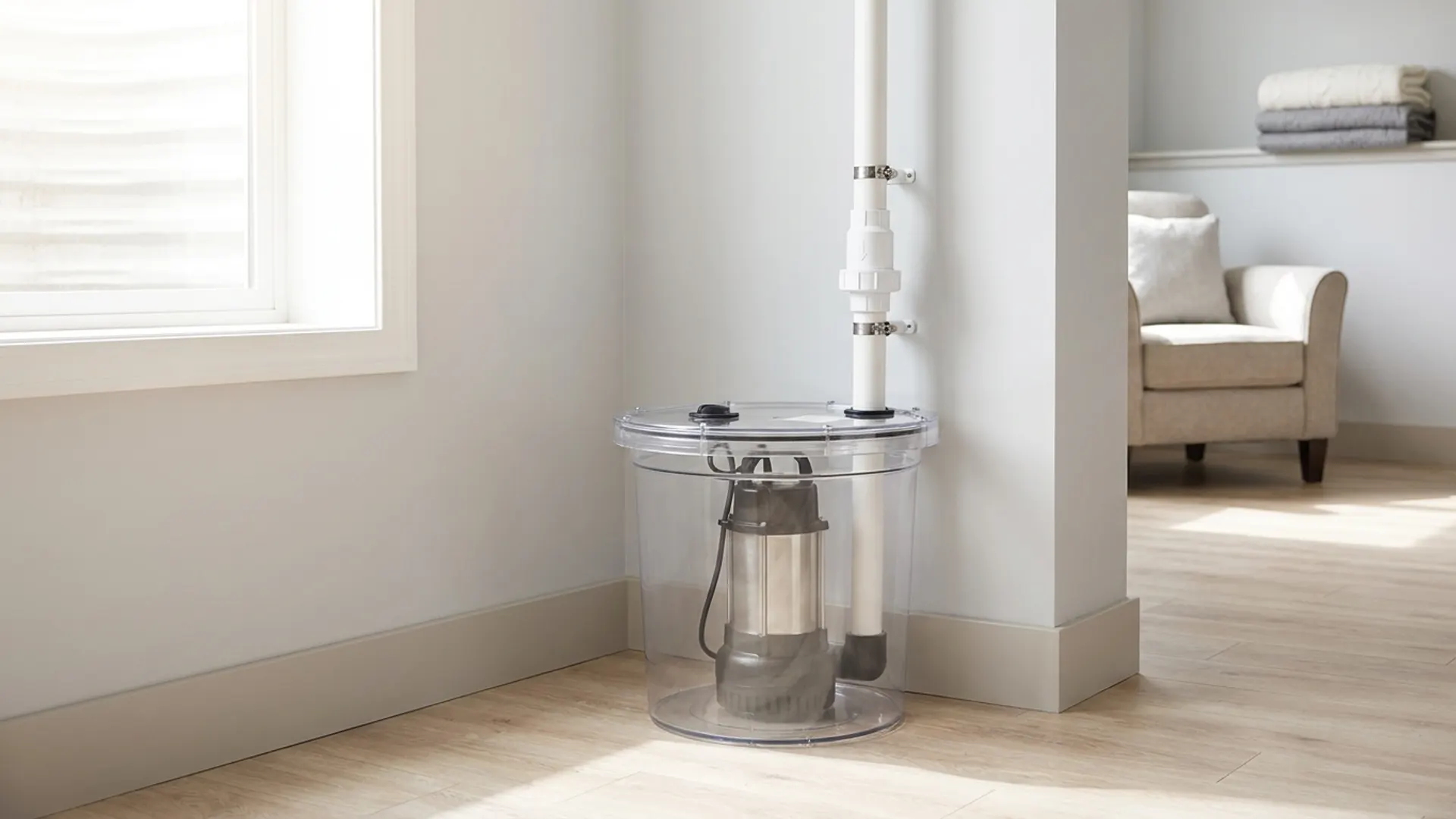
- The float, the check valve and the discharge line are where a pump that runs but doesn't clear is usually failing.
- Run through a full cycle with water, the pump should discharge well away from the foundation.
A lot of Long Island is not on a sewer. Nassau is mostly sewered; large parts of Suffolk are still on cesspools and septic, and Suffolk County has run grant programs for years to help homeowners replace failing systems with modern nitrogen-reducing units.
A soft green patch in the yard that stays green in August, or a drain that gurgles when the washing machine empties, is the system telling you something. A camera inspection tells which it is: a blockage between the house and the tank is a very different bill from a cesspool that has stopped percolating.
On the sump side: south shore basements and crawlspaces take on water, and many pumps there were installed after Sandy and have not been tested since. A pump that has sat dry for eleven years is not one to discover the truth about during a nor'easter.
The float, the check valve and the discharge line are what to test, and a battery backup is worth considering: in a neighborhood that loses power in the same storm that brings the water, it is the whole point of having a pump.
We handle sewer & sump across Hicksville, Levittown, Bethpage, Plainview, Syosset, Jericho and the surrounding towns. See the full coverage area.
Ready when you are.
Call now or send a quick message — we'll get right back to you.